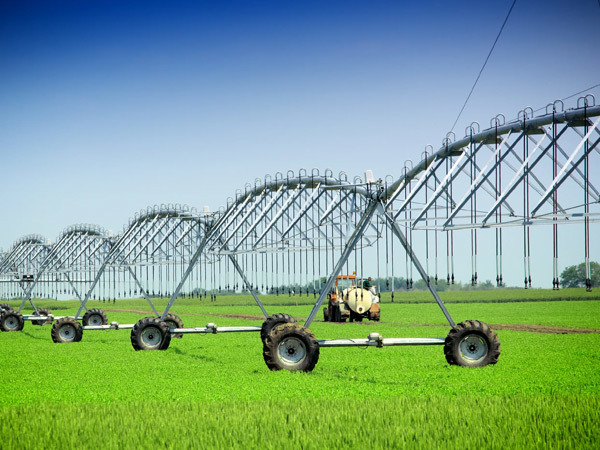
A high-tech enterprise specializing in large-scale sprinkler irrigation and water and fertilizer integration


Advantages of central fixed water and fertilizer integrated machine
Release time:
Jun 11,2025
The central fixed water-fertilizer integrated machine is an important equipment for agricultural modernization irrigation and fertilization. Its core advantages are reflected in "precise control, efficient integration, and strong adaptability". The following is an analysis from the dimensions of technical principles, application value, cost-effectiveness, etc.:
The central fixed water-fertilizer integrated machine is an important equipment for agricultural modernization irrigation and fertilization. Its core advantages are reflected in "precise control, efficient integration, and strong adaptability". The following is an analysis from the dimensions of technical principles, application value, cost-effectiveness, etc.:
I. Precision: "Targeted treatment" of water and fertilizer supply
1. Quantitative fertilization on demand, with an error of ≤3%
Technical logic: Real-time monitoring of the concentration of water-fertilizer mixture through flow sensors and EC/PH sensors, combined with crop growth models (such as the nitrogen, phosphorus and potassium ratio of 1:0.5:1.2 required during the fruit expansion period of tomatoes), automatically adjust the frequency of fertilizer pumps, and achieve accurate fertilization per square meter to grams.
Case: A grape plantation uses this equipment to reduce the amount of potassium fertilizer per mu from 15kg of traditional fertilization to 12kg through precise fertilizer control during the color change period, and the sugar content of grapes is increased by 2 degrees.
2. Water and fertilizer are synchronized, and the utilization rate is increased to more than 90%
Compared with traditional methods: In the traditional fertilization + flooding mode, the fertilizer loss rate with water reaches 40%-50%, while the central fixed equipment directly delivers water and fertilizer to the 20cm range around the crop root system through drip irrigation/micro-spraying, reducing leakage and evaporation losses.
Data support: Application cases in Xinjiang cotton producing areas show that central fixed equipment has increased the water and fertilizer utilization rate of cotton from 60% to 88%, saving 200 cubic meters of water per mu and 30% fertilizer per mu.
2. Efficiency: Automation drives cost reduction and efficiency improvement
1. One-button control, saving 90% of labor
Operation mode: The equipment integrates a PLC control system, which can preset irrigation and fertilization programs (such as irrigating for 1 hour from 6:00 to 7:00 every day, with 20 minutes of fertilization), without manual supervision. Compared with traditional manual fertilization, 100 mu of orchards can reduce the number of workers by about 300 per year.
Remote management: Some high-end models support remote control via mobile phone APP. Farmers can check the equipment operation status (such as pipeline pressure, fertilizer liquid remaining) and adjust parameters in real time when they are away from home.
2. "All-round" operation adapted to multiple scenarios
Function integration: It can simultaneously realize multiple functions such as irrigation, fertilization, spraying (such as adding foliar fertilizer or pesticides), acid and alkali adjustment (injecting citric acid solution into the soil to adjust the pH value). For example, during the flowering period of citrus, watering, boron fertilizer application, and flower-preserving agent spraying can be completed simultaneously.
Operation efficiency: 1 device with a coverage radius of 100 meters can meet the water and fertilizer needs of about 500 acres of farmland, which is equivalent to 50 times the efficiency of traditional manual fertilization.
Learn more about industry dynamics

New customers enjoy 10% product discount
PRODUCT CENTER
CONTACT US
Address: 2-1-2301, Phoenix International Plaza, High-tech Zone, Jinan City, Shandong Province
Quality of service to win customer satisfaction


Shandong Yihe Agricultural Technology Co., Ltd. (Shandong Kewo Water-Saving Irrigation Equipment Co., Ltd.)